
Discover how to produce trade guidance materials simply for your company and start capitalising on your skills

A seasoned operator retiring, an accountant changing company, a fitter who is injured and away for several months... These are everyday stories in workshops, design offices, and so on. Yet every departure or absence leaves behind far more than an empty chair: it takes with it trade-skills, reflexes, an intelligence of the trade that is found in no manual. It is this living competence – embodied know-how – that your organisation risks losing forever if nothing is done.
And in industry in particular, the trade-skills one “sees” in the physical world are even more at risk. Why? We do not have a ready-made answer to that question, but the figures speak for themselves.
In short, building repositories matters all the more when the trade-skill is industrial. These “field cards” we suggest you build in less than a week are not a luxury. They are insurance: against forgetting, against the dilution of knowledge, against those moments when people say “only Pierre knows how to do that”. It does not need to be perfect or exhaustive; it needs to exist… and to live.
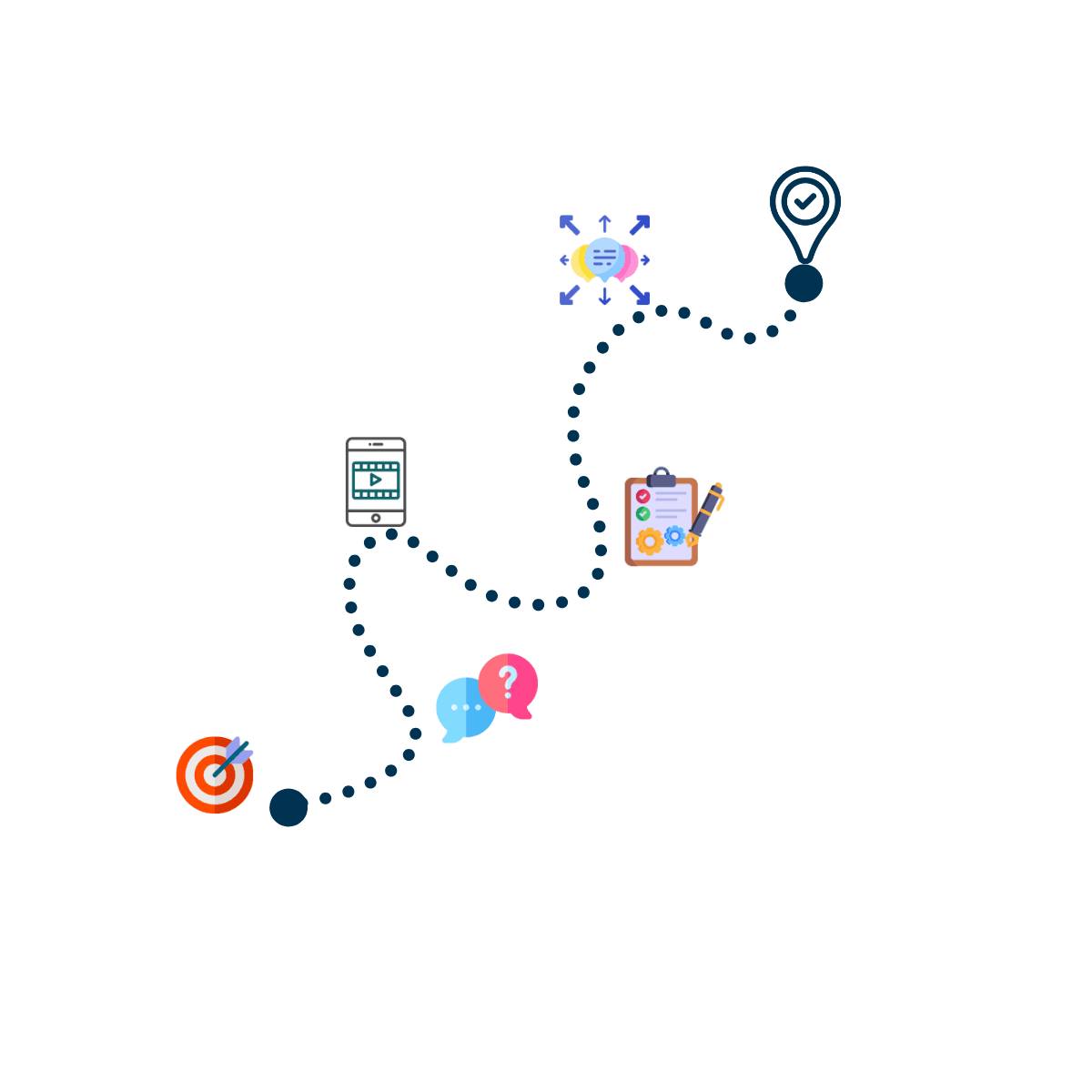
You only need tools already present in your day-to-day, an action plan and a dash of preparation for these key steps:
- Target an activity to investigate,
- Question an expert,
- Capture the raw material on video,
- Organise and put together your deliverable,
- Validate and distribute.
If you are here, it is because you are looking for ways to capitalise on your company’s skills. In the lines that follow, you will discover a simple, practical plan, designed for companies that have neither three full-time consultants nor months to devote to a titanic project!
A few dedicated slots over a week are enough to get the machine going: that is your starting investment. And at the end, a living tool that captures your company’s memory, serves as a springboard for newcomers and feeds team pride.
FAQs of “living field cards”
Before you start, let us answer a few questions you might have:
How much does it cost?
Nothing if you use your in-house tools.
You can also equip yourself with a SaaS platform for work instructions online, which will start at around 15 € / operator / month; still, better that than 47 M € of lost productivity for lack of sharing!
If you want to equip yourself with dedicated equipment for capture : a dedicated smartphone and a microphone for the occasion will cost around 300€. But it is not a prerequisite.
And video quality?
If the trade-skill is clearly visible and the expert comments, that is enough. Visual perfection comes after trade value.
Who validates the content?
The winning pair is: a trade expert, a content referent (HR manager, quality manager, …). As you will likely be the content referent, you will trust your expert to validate the technical aspects of the deliverables.
And if the expert “does not want to be filmed”?
Rare, but not impossible. In that case, start with the audio interview. Often, trust comes when they see that the camera is there to honour, not to control.
And now, let’s get into the schedule!

Jour 1
1️⃣ Target a critical company activity (≤ 10 minutes)
Start simply: take a notebook 📓, a coffee ☕, and note an activity that would make your workshop or department wobble if “the expert” were not there tomorrow. Do not look for perfection, look for the obvious:
- The delicate setting of a machine?
- The accounting treatment “that must not go wrong”?
- Quality control by “feel”?
Tip: if as you read the question an expert’s name comes straight to mind, you have your subject.
2️⃣ Question an expert (15 minutes of exchange)
This is the best moment: in a corridor, by going to see them at their station, … go and see the person for this activity: the one who masters it best.
And then? Just ask the magic question:
“What are the main steps of this activity, in order?”
Then note: the main steps, not the details (they will come later).
Watch out! This first exchange must feel like a conversation of trust, not an audit. You think the expert will not want to share their secrets? Think again: in the vast majority of cases, these knowledge holders are not questioned that often and are delighted to partager their expertise. After all, if they have been putting it into practice for so long, it is because they are attached to it, and who does not like sharing what drives them day to day?

Jour 2
3️⃣ Capture the raw material (set aside 2 hours)
The very next day (and after you have agreed with the expert), you can bring out the camera. No need for a TV control room: your smartphone will do!
- Film the expert in action — you will have warned them beforehand (short shots, hands visible, key trade-skills).
- Record their words (lapel mic, or simply by having them comment out loud).
- Recover the documents they use (checklists, jigs, macros…).
🎥 Tip: aim for authenticity. Better a slightly “raw” but true video than a polished, frozen film.


Jour 3
4️⃣ Build process cards (with your in-house tools or Le Beau Geste)
You are there! With the captured material, you can create your first cards. Here the rule is simple: “No matter the flask, so long as we have the intoxication”. In other words: there is no rule for which materials to use. What will work is what is simplest and most obvious to use in the field.
- With your in-house tools: printouts of your documents, PowerPoint, photographed whiteboard, video on a dedicated company online space, online LMS, …
- Le Beau Geste – the fully automatic version of card creation. The tool automatically cuts your videos against the key steps, creates detailed instructions, available from any device, in visual and interactive format, or as voice commands.
No matter the tool: each card must tell the trade-skill in a few key steps (Between 5 and 10 on average).
For each step of the task, note clear instructions:
- control parameters,
- bonnes pratiques,
- equipment list,
- …
Not sure of your choice? Here is a comparison between “in-house” tools and Le Beau Geste:

Jour 4
5️⃣ Settle the important questions and validate (1 hour with your expert)
Show the expert with whom you captured the material your cards or content as you go, or block an hour at the end of the day to:
- Correct the inaccuracies (“no, I put the tool down before checking the temperature”).
- Add the classic traps (“careful, this screwdriver ‘clicks’ too early”).
- Approve the “ready to distribute” version.
✅ This step is central: validation by the expert is the seal of credibility of your card
Jour 5
Distribute and keep it alive! (additions, feedback, evolutions)
You are finally ready to circulate your card:
- Put your cards in briefings or make them available at workstations,
- Collect feedback: “I would have added that”, “I saw a new trap”.
- Update as soon as a tool changes or a standard moves.
Point of vigilance: of course, depending on the tools you have chosen for your cards, it will be more or less easy to distribute them to the greatest number!
📆 Tip: if the tools you have chosen are not interactive, set aside a dedicated 15 minutes somewhere in the week for your teams and suggest that in turn one of them picks up a card and proposes improvements.
30 days for a complete library
If you repeat this process step by step, you build more than a binder of procedures:
- You protect your company’s expert trade-skills from being forgotten.
- You speed up the integration of newcomers.
- You value your experts who see their know-how recognised.
But this conclusion does not stop at a list of benefits: it calls you to action. Building this repository is choosing to give a voice to the hands and minds that keep your company running. It is deciding that every movement, every knack, every intuition of your teams deserves to be shared. It is also accepting that this library evolves, is corrected, is enriched over time: a living tool for living trades.
Start small. Choose a critical activity tomorrow morning. Take ten minutes to identify the expert, fifteen minutes to listen, two hours to capture their trade-skill. And when you put the first card on the table, you will feel that new energy: that of a company that does not let its know-how go out, but makes it circulate, breathe and grow.
👉 Alors, demain, on filme quoi ?
